
Entering the UK: Border Controls
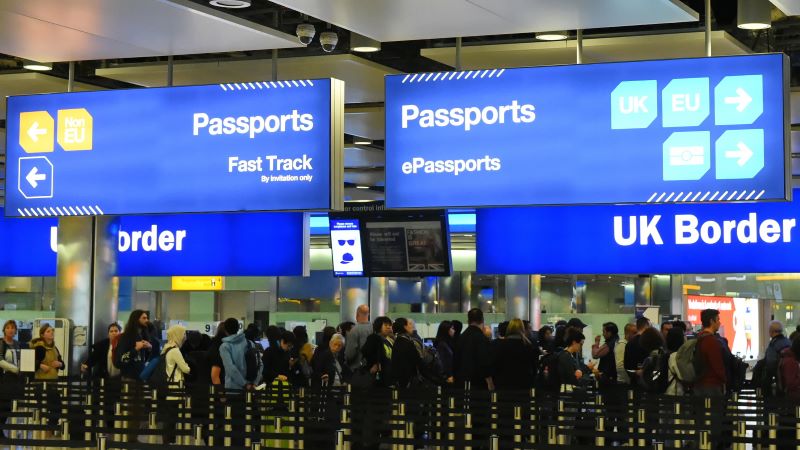
The border with the United Kingdom is characterized by numerous controls and restrictions that define and direct the flow of migration in and out of the country. Britain welcomes thousands of visitors to its territory every year and most of them enjoy a smooth and safe entry process when crossing national border controls.
If you’re traveling on a UK visa or on visa waivers such as a UK eTA or EVW, it’s important to know what to expect when you arrive on British soil. With the intention of clarifying what happens when crossing the UK border, this article will describe the different ways in which the foreign traveller should:
- Behave when crossing British border control
- Conditions for entering the country
- Visiting the UK after Brexit
What to Expect When Crossing the Border into the UK:
All tourists entering the UK, regardless of the purpose of their visit, must present their passport to the immigration officer at the checkpoint. The British Border Force is a police force belonging to the Home Office.
This is responsible for border control operations and is on the front line in the UK’s air, sea and rail ports.
In order to meet the security standards necessary to enter the country, those arriving must:
- Have your passport or ID card and any type of UK visa or visa waiver ready for inspection
- Remove sunglasses or any other non-religious objects that hide your face
- If you are traveling with family members, it is possible and desirable to go to the control desk together with all family members.
If for any reason the Border Force officer on duty refuses entry to a visitor, the visitor will be notified in writing of the reason for this decision.
Usually the renegade must leave the UK immediately and depart with the first available flight (or other if you enter by land or sea).
Temporary and contingent requirements to cross the UK border
Due to the coronavirus pandemic, there are some additional and temporary restrictions on entering the UK.
To enter the UK, foreign nationals must complete a UK Travel Health Certificate form, also known as a visitor locator form.
Most passengers arriving in Great Britain are subject to 14-day self-isolation.
Flying to the UK: Entering the plane
Most arrivals to the UK are by plane. The country has more than 40 airports. Some of them also represent some of the most used transport hubs by airlines in Europe.
The largest airports in the country include:
- London Heathrow International
- London Gatwick International
- London Luton
- London City
- London Stansted
- London Southend
- Manchester
- Liverpool John Lennon
- Birmingham
- Bristol
- Cardiff
- Newcastle
- Belfast
- Edinburgh
- Glasgow
All passengers arriving by air must be screened and cleared for entry by a UK Border Force officer before they can leave the airport and remain freely on British territory.
This control consists of two parts:
- Travel document and visa check or ETA visa waiver.
- Customs checks: usually you pass without a hitch. Sometimes you are subject to routine and more detailed baggage checks. Everything is at the discretion of the officer in charge.
These checks ensure that the criteria and rules for entry into Great Britain are respected.

Use of airport totems or automated gates for controls
Travellers with electronic and biometric passports, who are part of the admitted countries, can use the electronic gates to enter the UK.
This allows for an automated process that is often faster than the queue of manual checks by the border guard.
Arrivals from the following countries can use the automatic entry gates:
- Canada
- Australia
- Japan
- New Zealand
- Singapore
- South Korea
- United States
However, it is good to remind those coming by flight that if you are traveling with children under 12 years of age, it will not be possible to use these gates.
Currently, travelers from the European Union (EU) and those with passports from the European Economic Area can also use automatic cancellations.
However, this could change when Britain completes the Brexit process with the EU.
At Sea for the United Kingdom: Entering the Boat
If you think that the United Kingdom is an island, it will be logical to deduce that it welcomes many visitors by sea thanks to its busy seaports, both commercial and tourist.
The international ports with the most passengers and therefore the busiest in the UK are:
- Dover
- Portsmouth
- Holyhead
- Tyne
- Harwich International
- Hull
Similar to air travellers, passengers arriving at seaports in Britain will need to be screened by the British Border Force before they can enter the country.
As stated above, they will examine the identity documents as well as the passport of the person entering, assessing whether the person arriving is eligible to enter the country according to immigration law.

By Road to the UK: Entering by Car or Bus.
Thousands of tourists and visitors enter the UK every year by car or bus. As with arriving at any destination in the UK from abroad, passengers must have their travel documents ready to pass the immigration checks of the UK border force.
Whether arriving in a private or commercial vehicle, the driver and passengers must be prepared to exit the vehicle in the event of detailed checks.
If arriving by bus, all passengers will need to get off the vehicle to show their passport at the border control point in the country.
Currently, the UK has reciprocal arrangements in place to carry out customs and immigration checks before drivers and travellers arrive on British soil.
This usually happens in countries such as France and the Netherlands. It is not excluded that due to Brexit this agreement may change in the near future.
Entering the UK after Brexit
The United Kingdom has effectively left the European Union (EU). A trade agreement is currently being formalised that will set out how the UK and the EU will interact in the future.
This came into force in the year 2021 but as we have seen, there are quite a few headaches and disagreements still in place between the two parties. First of all, the issue of controls at the border between the EU and the UK in Northern Ireland.
For citizens of the European Economic Area (EEA), there are likely to be a number of changes as a result of Britain’s departure from the European Union’s regulatory framework.
The UK government has suggested that passengers from EU countries will no longer be able to travel with their ID card alone and will instead need passports and visa waivers.
In the not too distant future, probably by 2025, it will become mandatory to register for an eTA in the UK before arriving in the country.
The UK eTA will be available online. Travellers will need to complete an application form available up to a few days before their departure for the UK.
If the necessary requirements are met, the visitor will be allowed to travel to Great Britain for several short stays over a number of years.
This website will be updated regularly and any new developments regarding the UK eTA will be reported.