
Scotland’s Secret Fairways: Five Niche Golf Courses Worth Crossing an Ocean For
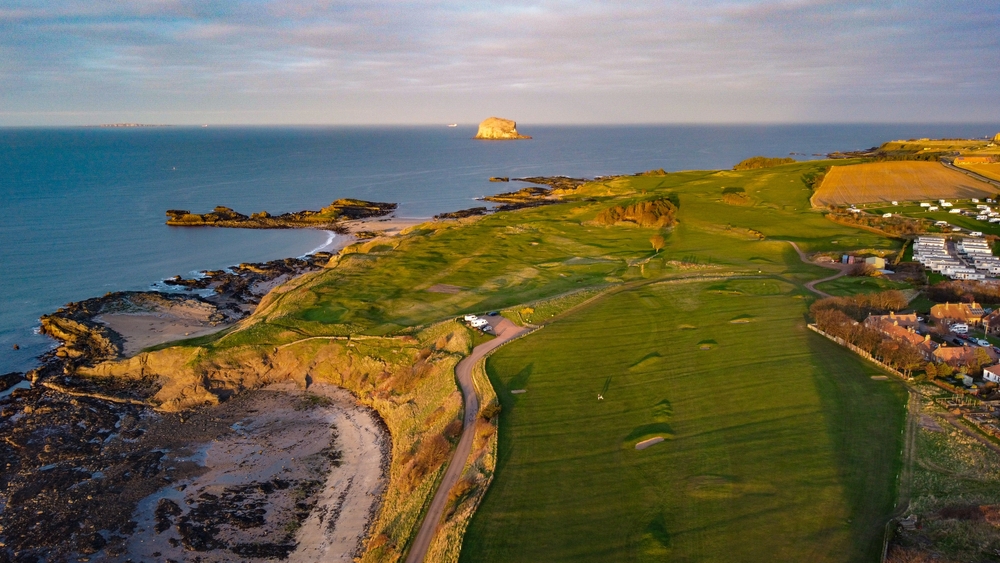
The Open Championship gets all the glory. But the real soul of Scottish golf lives somewhere else entirely.
There’s a version of a Scotland golf trip that millions of Americans have taken: fly into Edinburgh, tick off St. Andrews, Carnoustie, and maybe Turnberry, and come home. It’s a great trip. It’s also only half the story.
The other half involves ferries, single-track roads, cattle on the fairways, and clubhouses where the barman knows everyone by name. It involves courses that have been quietly doing things their own way since before the Wright Brothers ever left the ground — courses that, frankly, still haven’t gotten around to worrying about what you think.
These five Scottish courses won’t show up on most bucket lists. That’s precisely why you should play them.
1. Cruden Bay Golf Club — Aberdeenshire
The Experience
Twenty miles north of Aberdeen, where the headland crumbles into the North Sea and the ruins of Slains Castle loom above the dunes like something out of a Bram Stoker novel — and indeed Stoker did visit this stretch of coast before writing Dracula — Cruden Bay might be the most cinematic golf course in Scotland. Old Tom Morris laid out the original routing in 1899, and Tom Simpson refined it in the 1920s with a deft hand that preserved the wild, theatrical dune landscape. The result is a par-70 that winds through amphitheaters of golden sand, over blind crests, and along ledges with panoramic views that make grown men put their clubs down and just look.
The routing changes direction constantly, which means the wind — and there is always wind — will test every club in your bag from every angle. Budget four hours; the course demands patience and rewards it.
A bonus: your summer green fee includes a round on the charming nine-hole St. Olaf course, playable the day before or the day after. Plan accordingly, and consider hiring a caddie to navigate the blind shots.
The Practical Details
- Green Fee (2026): Weekday £205 (~$260), weekend £220 (~$280) for the summer season (May–October). Shoulder season (April, October) is £140 (~$178). Winter rate is £110 (~$140).
- Golf Carts: Not available under any circumstances — the terrain makes buggies impossible, and the club cannot accommodate them even with a medical certificate. Pull trolleys and caddies are available.
- Dress Code: Smart casual. No collarless shirts or denim in the lounge or restaurant. No hats in the clubhouse.
- How to Book: No online booking system. Call +44 (0)1779 812285 or email bookings@crudenbaygolfclub.co.uk. A non-refundable deposit secures your tee time; balance due at least one month before play. Weekend visitors are restricted to afternoon tee times only: Saturdays after 2pm, Sundays after 12:30pm.
- Best Time for Fewer Crowds: Shoulder season — late April through mid-May, or September. Weekdays are noticeably quieter than summer weekends.
Where to Stay & Eat
Most golfers base themselves in Aberdeen (35 minutes south), where the Marcliffe Hotel & Spa offers proper luxury. The Kilmarnock Arms Hotel in Cruden Bay village is a short walk from the 1st tee and beloved by visiting golfers for its unpretentious atmosphere and genuine welcome. Post-round, the Cruden Bay clubhouse serves rotating daily lunches — hearty soups, sandwiches, fresh fish — alongside local ales and a whisky selection. Order a pint, find a window seat overlooking the 18th, and take your time.
2. Machrihanish Golf Club — Kintyre Peninsula, Argyll
The Experience
Getting to Machrihanish requires commitment. You’ll drive the A83 south from Glasgow for nearly two and a half hours, through some of the most dramatically empty countryside in Britain, until the road deposits you at the tip of the Kintyre Peninsula. Paul McCartney wrote a song about this place. Old Tom Morris built a golf course here in 1876. Both were onto something.
The opening tee shot is one of the most famous in golf: a diagonal drive over a corner of the Atlantic Ocean, threading the gap between the beach and a grassy ridge, requiring a committed draw and a measure of nerve. From there, the course unfolds along Machrihanish Bay through natural dunes that have never been overthought. After a fire destroyed the original clubhouse in 2018, a beautiful modern replacement opened in 2021 — proof that Machrihanish can move forward without losing what made it special.
The wind arrives from the Atlantic without ceremony. On a calm day Machrihanish is merely excellent; on a blustery one it is genuinely humbling. Bring an extra sleeve of balls and your best attitude.
The Practical Details
- Green Fee (2026): High season (April–September) approximately £160 (~$203) per round. Online booking is available at machgolf.com.
- Golf Carts: Buggies and electric trolleys available for hire; contact the pro shop to prearrange.
- Dress Code: Proper golf attire required on the course and in the clubhouse.
- How to Book: Online at machgolf.com, or contact the pro shop at pro@machgolf.com. Book at least a month ahead in summer.
- Best Time for Fewer Crowds: Early May and late September see a fraction of peak-summer traffic. Weekday mornings in those months are peaceful — you may have the Atlantic horizon entirely to yourself.
Where to Stay & Eat
The Ugadale Hotel, directly across from the first tee of Machrihanish Golf Club, is the obvious choice — 22 rooms, beautifully restored, and run by the same people behind neighboring Machrihanish Dunes. The Royal Hotel in Campbeltown (about 10 minutes away) offers solid, affordable lodging with a characterful bar. Post-round, the 2021 clubhouse bar serves proper pub food — soups, filled rolls, daily hot plates — alongside local ales and, inevitably, a dram from Campbeltown’s celebrated Springbank Distillery, one of Scotland’s most revered.
3. Brora Golf Club — Scottish Highlands
The Experience
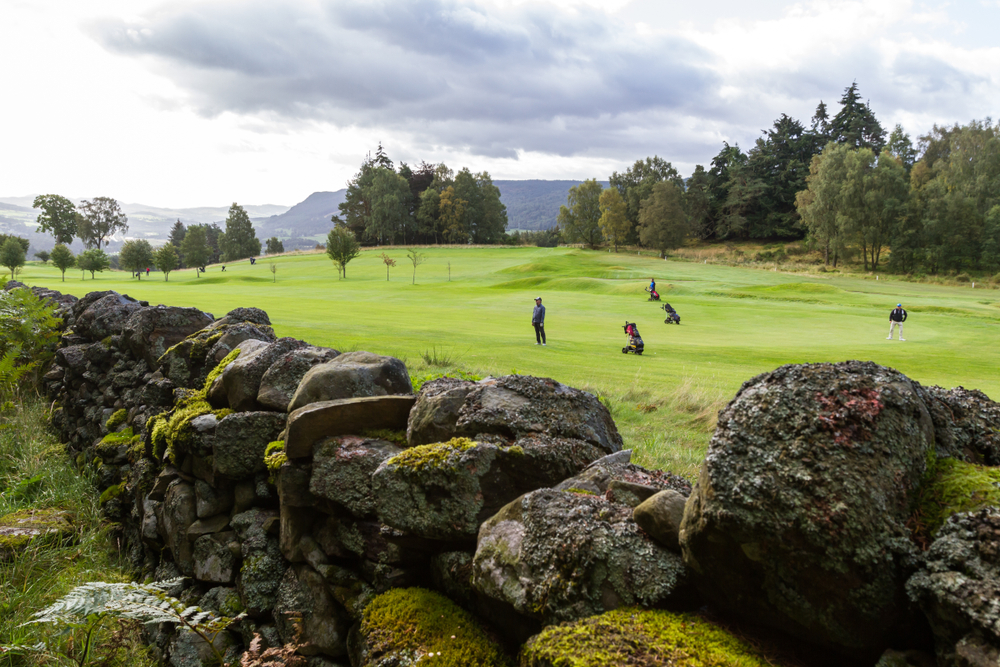
Brora sits about 75 minutes north of Inverness on the A9, in a stretch of Highland coastline so beautiful it almost distracts you from the golf. Almost. James Braid — five-time Open Champion and the most prolific course architect Scotland has ever produced — redesigned the course in 1924 for the princely sum of £25. He might have done it for free.
The course runs along the North Sea with open, rolling fairways and virtually no dune buffer, which means the wind arrives unimpeded and unannounced. The front nine hug the coastline with views that never let you forget where you are; the back nine turn inland across heather and gorse before the famous closing hole — a par-3 directly into the prevailing wind — delivers its verdict.
The quirks are part of the charm. Cattle still graze the course and have full right of way. The Clynelish distillery, source of a highly regarded single malt, is visible from several holes. Brora hasn’t changed much since Braid left, and it doesn’t intend to.
The Practical Details
- Green Fee (2026): High season (May–October), overseas golfers pay £160 (~$203). Twilight rates (from 3pm) drop to £75 (~$95). April is £140 (~$178) full rate.
- Golf Carts: Limited buggy availability; preference given to those with a medical certificate. Buggies should be arranged in advance. Caddies, electric trolleys, and pull trolleys are all available.
- Dress Code: No strict code — smart casual is all they ask. Jeans are acceptable on the course and in the clubhouse, which is refreshingly relaxed for a course of this caliber.
- How to Book: Online at broragolfclub.co.uk (up to 182 days in advance) or email reservations@broragolfclub.co.uk. Payment is due within 14 days of booking.
- Best Time for Fewer Crowds: June through early July offers the best combination of long Highland daylight and pre-peak quiet. Midweek rounds in September are equally rewarding.
Where to Stay & Eat
The beautifully restored Sutherland House Hotel, steps from the 1st tee, is the ideal base — a former country house with views to match. In Inverness (about 75 minutes south), the Kingsmills Hotel is a popular choice for golfers combining Brora with Royal Dornoch. The Brora clubhouse is open daily April through October, serving breakfasts and light lunches with warmth that matches the scenery. The whisky list leans heavily toward Clynelish, as it should.
4. Lundin Golf Club — Fife
The Experience
If you’re playing St. Andrews and want to add a round that most American visitors completely overlook, Lundin Links is 25 minutes south along the Fife coast and quietly magnificent. Old Tom Morris laid it out in 1868; James Braid reshaped it in 1909 after the course was divided from neighboring Leven. The result is a par-71 links with greens so consistently excellent that PGA professional Brad Faxon shot 63 here during Open Qualifying in 2000 — still a course record.
Lundin is compact, strategic, and honest. Out-of-bounds comes into play on most holes. Burns cross several fairways. The 14th, a par-3 played from a steeply elevated tee with the Firth of Forth and the Edinburgh skyline in front of you on a clear day, is one of the finest short holes in Scotland. The crosswind off the Forth on that tee will test your nerve and your ball-striking in equal measure. The clubhouse won Golf Clubhouse of the Year from Golf Monthly in 2008, and the standard hasn’t dropped.
The Practical Details
- Green Fee (2026): May–September, standard rate is £175 (~$222) before 1:30pm, and £150 (~$190) after 1:30pm. April rate is £125 (~$159) / £100 (~$127) after 1:30pm. No handicap certificate required, but a reasonable standard of play is expected.
- Golf Carts: Electric trolleys available; buggy availability is limited — confirm in advance.
- Dress Code: Smart casual on course and in the clubhouse. No denim, collarless shirts, sports shorts, shell suits, or golf shoes inside the clubhouse.
- How to Book: Online at brsgolf.com/lundingc, or email secretary@lundingolfclub.co.uk / call 01333 320202. Visitor times are Monday–Friday between 9:32am and 3:59pm; Saturday after 3pm; Sunday from 11:32am. A 50% deposit is required within three weeks of booking; balance due four weeks before play.
- Best Time for Fewer Crowds: April and October are significantly quieter than July and August, and green fees are lower. The course is in fine shape during both shoulder months.
Where to Stay & Eat
The Inn at Lathones — a 17th-century coaching inn between Lundin Links and St. Andrews — suits the spirit of the trip perfectly. The Old Course Hotel in St. Andrews (20 minutes north) is the luxury option. The Lundin clubhouse bar and dining room punch well above their weight. The lunch menu is classic Scottish — soup of the day, sandwiches, and daily specials — with local ales poured generously. The cullen skink (smoked haddock chowder) is not to be missed.
5. Shiskine Golf & Tennis Club — Isle of Arran
The Experience
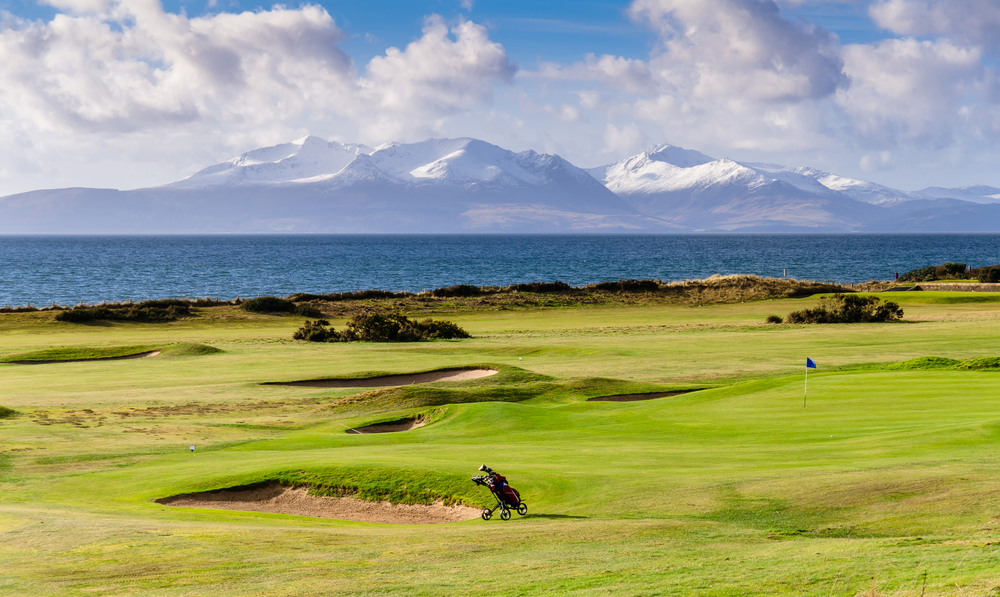
There is no other course quite like Shiskine. It is 12 holes. It is 2,996 yards. It sits on the western shore of the Isle of Arran — a small island reached by a 55-minute CalMac ferry from Ardrossan Harbour, about 35 miles southwest of Glasgow — overlooking the Kilbrannan Sound toward the Kintyre Peninsula. It was founded in 1896, and it has been confounding visitors, enchanting them, and sending them back to replay it immediately ever since.
Nearly every shot is blind. You aim at poles on top of grassy mounds. The par-3 4th plays from a hillside shelf with a spectacular view of the sea, requiring a leap of faith over a ridge to a hidden green. The par-5 9th is the course’s only five, and a burn cuts across the lay-up zone to punish the indecisive. Shiskine rewards feel over power, imagination over length, and humor over frustration.
One American golf writer described Shiskine as the course he’d choose to play for the rest of his life if forced to choose one. That sounds like hyperbole until you stand on the 4th tee with the Sound of Kilbrannan spread out before you and the island entirely quiet around you — and then it sounds about right.
The Practical Details
- Green Fee (2026): Mon–Fri £40 (~$51), Sat–Sun £42 (~$53) per 12-hole round. A full-day double round (24 holes) is £65 (~$83) weekdays, £75 (~$95) weekends. Twilight rates (5pm onwards, April–September) drop to £32–£35 (~$41–$44). Golf buggies are available at £25/round (~$32) and should be reserved in advance.
- Golf Carts: Buggies available (£25/round) for those who need them, plus pull trolleys for hire at £3/round.
- Dress Code: Relaxed — smart casual golf attire is welcomed. Caps and golf shoes must be removed before entering the clubhouse.
- How to Book: Online at shiskinegolf.com (Visitor Booking tab) or call +44 (0)1770 860548. Booking is recommended, especially on summer weekends when club competitions can close the tee.
- Best Time for Fewer Crowds: Weekday mornings in May and early June. Plan your ferry early: CalMac runs from Ardrossan to Brodick (eastern Arran), then it’s a 45-minute drive across the island to Blackwaterfoot on the west coast where Shiskine sits. The ferry schedule is available at calmac.co.uk.
Where to Stay & Eat
The Kinloch Hotel in Blackwaterfoot is a short walk from the 1st tee and has a proper bar, a dining room featuring local Arran seafood, and island hospitality that city hotels never quite replicate. For more options, Brodick (the island’s main town on the eastern shore) has the comfortable Auchrannie Resort. Back at the course, the Shiskine Clubhouse Grill and Tearoom serves hot lunches with a view of the sea — soups, filled rolls, daily specials — and a round of cold Tennent’s lager after two loops of Shiskine is, in its modest way, one of the great post-golf experiences in Scotland.
A Few Things Every American Golfer Should Know Before Teeing It Up in Scotland
Walking is expected. Several courses on this list cannot accommodate buggies due to terrain. If you need one for medical reasons, confirm availability well in advance — Cruden Bay cannot offer them under any circumstances.
Wind is non-negotiable. Scottish links courses are designed around the wind. Bring an extra layer, accept that your 7-iron will sometimes be your 5-iron, and learn the bump-and-run. Fighting the wind is a fool’s errand.
Dress codes matter. Even the relaxed ones. Collared shirts and proper golf trousers or tailored shorts are the baseline everywhere on this list. No golf shoes inside the clubhouse is a near-universal rule.
Book early for summer. July and August are busy everywhere in Scotland. Shoulder season — May, June, and September — offers better conditions, smaller crowds, and lower rates without sacrificing a single yard of scenery.
Currency note: All USD conversions are based on an approximate £1 ≈ $1.27 rate. Verify the current rate before travel, as fees and exchange rates may change.
Scotland has over 550 golf courses for a population of 5.5 million people. The famous ones deserve their reputations. But the courses that don’t need to prove anything to anyone — the ones that have been playing the same game the same way for over a century — those are the ones you’ll remember longest.