
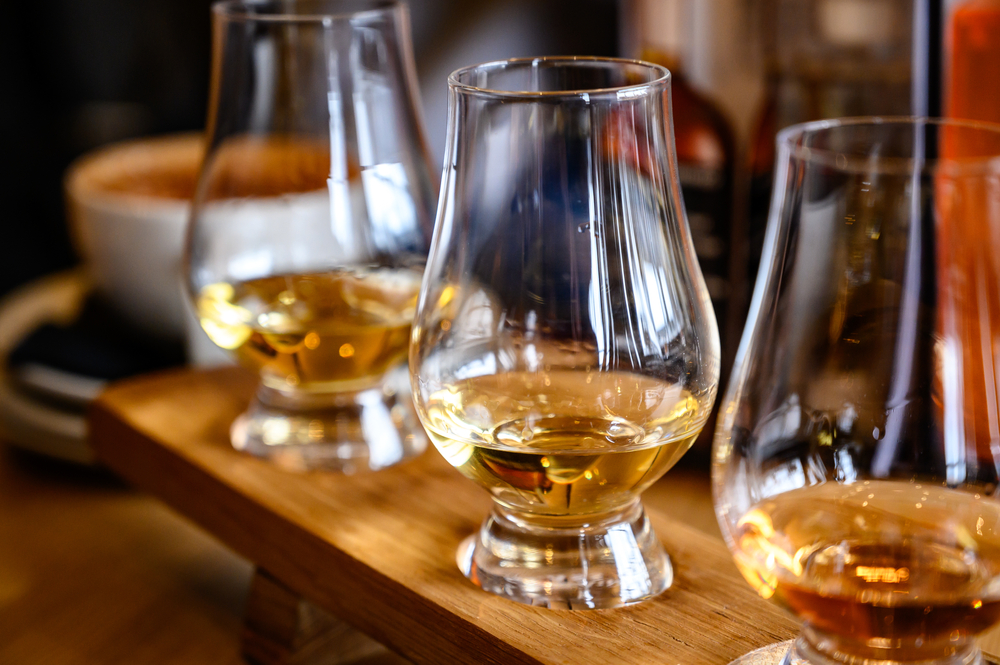
Five Scottish Whisky Distilleries Worth Crossing an Ocean For
Scotland has 148 working distilleries. These five will teach you something you didn’t expect to learn.
There are two kinds of distillery visits. The first kind involves a gift shop, a laminated floor plan, and a guide reading from a script. The second kind involves someone who has worked in the same building for twenty years, a warehouse that smells of time itself, and a glass of something you will never forget. All five distilleries on this list belong to the second kind — or at minimum, offer tiered experiences that get you there quickly.
Americans have always had a complicated relationship with Scotch. They know the names — Glenlivet, Johnnie Walker, The Macallan — without always knowing where they come from or why they taste the way they do. Scotland is where you find out. And there is no better classroom than the source.
1. Glenfiddich Distillery — Dufftown, Speyside
The Experience
Glenfiddich is the world’s best-selling single malt Scotch, and yet the distillery in Dufftown remains one of the most honest and accessible whisky experiences in Scotland. Founded in 1887 by William Grant, who built it with his own hands, stone by stone, it has been in continuous family ownership for over 130 years — a rarity in an industry largely dominated by global conglomerates. On-site bottling still happens here, which is genuinely unusual for Speyside.
The standard Explorer Tour (1.5 hours) walks you through production, covers Glenfiddich’s history in the exhibition, and ends with a guided tasting of four expressions — the 12, 15, 18, and 21 Year Old. But the experience that makes Glenfiddich worth a special trip is the Solera: Deconstructed Tour (2.5 hours): you visit Warehouse 8, home to the famous Solera vat that never empties, taste four cask-strength samples of the 15 Year Old at different stages, then step into Malt Master Brian Kinsman’s blending room to create your own version of the 15 — which you bottle and take home. That last detail is the one that matters.
The Practical Details
- Tour Cost: Explorer Tour approximately £20–£30 (~$25–$38) per person; Solera: Deconstructed approximately £50 (~$63) per person. Book via glenfiddich.com. Courtesy non-drinking packs are available for designated drivers.
- How to Get There: Dufftown is about 65 miles from Inverness (1.5 hours by car) and 67 miles from Aberdeen (1.5 hours). No direct bus to the distillery; hiring a driver or private tour is strongly recommended.
- Arranging a Driver: Private whisky tour operators including Speyside Tours, Cairngorm Tours, and Scottish Routes offer full-day Speyside itineraries with driver/guide from Inverness or Aberdeen, typically £250–£450 (~$320–$570) for a small group of 2–4.
- Best Time to Visit: Spring (April–May) or early September. July and August bring coach tour groups; the Explorer Tour can lose its intimacy with a full house.
What to Buy
Glenfiddich’s distillery shop carries expressions not available at retail, including single cask bottlings, limited Malt Master’s Selection releases, and the rare Glenfiddich 30 Year Old (approx. £350/~$444 per bottle). The 15 Year Old Solera Reserve (approx. £45–£55/~$57–$70) remains the best expression of the house style and travels beautifully. The 21 Year Old Gran Reserva, finished in Caribbean rum casks (approx. £130/~$165), is one of Speyside’s finest and is worth carrying home.
Souvenirs: The copper-etched hip flasks, personalized miniature sets, and the distillery-exclusive clothing line are all tasteful and genuinely Scottish.
Where to Stay & Eat
Dufftown itself is tiny, but the Craigellachie Hotel (7 miles away, from ~£150/$190 per night) is one of the finest small whisky hotels in Scotland — its Quaich Bar has over 900 whiskies on the list. The Speyside Cooperage café nearby serves good lunches. The Glenfiddich distillery’s converted Malt Barn houses the Whisky Lounge, open to all visitors (no tour required), serving drams by the glass from 9:30am–4:30pm.
2. Lagavulin Distillery — Isle of Islay
The Experience
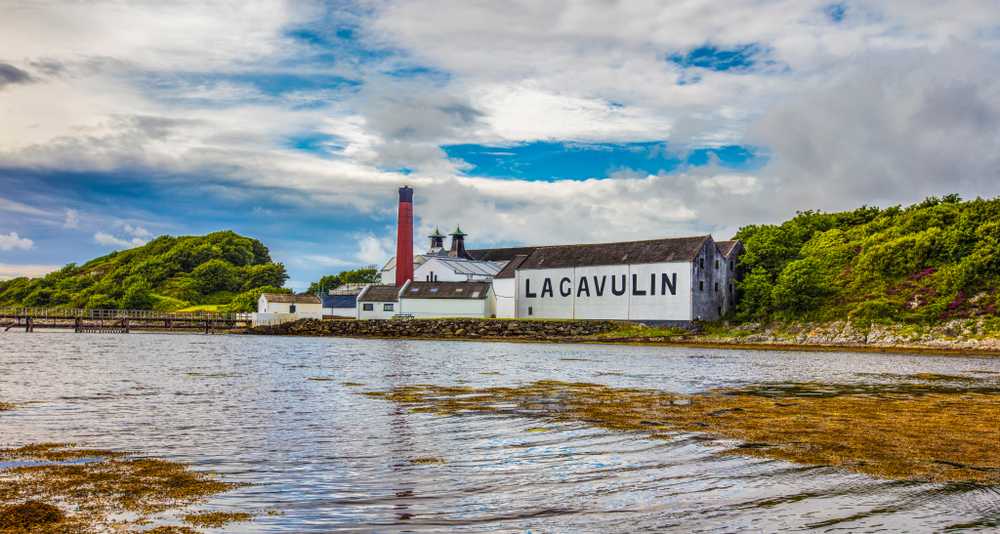
Getting to Islay requires a 2-hour ferry from Kennacraig on the Kintyre Peninsula — but that crossing, with the Atlantic coast opening up ahead of you and the island materializing out of the mist, is part of the experience. Islay (pronounced “eye-lah”) is a small island that produces an outsized percentage of the world’s most intensely peated whisky, and Lagavulin is its most iconic expression. The distillery sits in a small sheltered bay beneath the ruins of Dunyvaig Castle, and it looks exactly like the poster in your dentist’s waiting room — except you’re standing in front of it.
The Classic Tour (1.5 hours, £22/~$28) includes the full production walk-through and a three-dram tutored tasting starting with Lagavulin 16 Year Old in its home, which has a different quality from drinking it anywhere else. For the more serious visit, the Warehouse No. 3 Experience (1.25 hours, £60/~$76) puts you directly in front of the casks with draw samples at different stages of maturation — four whiskies total. The Distillery Exclusive Experience (2 hours, £110/~$140) adds a tour of production areas and a five-dram tasting in the private Mackie Lounge, named for the whisky’s legendary champion Peter Mackie.
The Practical Details
- Tour Costs: Classic Tour £22 (~$28); Warehouse No. 3 Experience £60 (~$76); Distillery Exclusive Experience £110 (~$140). Book at malts.com. The Malt Mill Bar at the distillery is open to all, no tour required.
- How to Get There: Fly Loganair from Glasgow to Islay Airport (35 minutes, approx. £80–£150/~$100–$190 return) or take the CalMac ferry from Kennacraig (approximately £14/~$18 per person each way, cars extra). The Three Distilleries Pathway — a coastal walking trail from Port Ellen — connects Lagavulin, Laphroaig, and Ardbeg within a 3-mile stretch.
- Arranging a Driver/Tour: Islay Taxis (+44 (0)7810 670059) and several local operators offer island-wide distillery transfers. For a full guided day across multiple distilleries, operators such as DH Group Tours and Scottish Routes offer multi-day Islay packages with transport from mainland Scotland from approximately £400–£700/~$508–$889 per person.
- Best Time to Visit: May brings the annual Fèis Ìle (Islay Festival of Music and Malt), when every distillery releases limited expressions and opens its warehouse doors. Book months in advance. June–September is peak, but Islay is small and manageable year-round.
What to Buy
The distillery shop carries the Lagavulin Distillery Exclusive bottling — a cask-strength expression only available on-site (approx. £80–£100/~$100–$127). The classic 16 Year Old (approx. £60/~$76) is actually cheaper here than in most US markets. The annual Fèis Ìle limited editions sell out at the festival; if you can get one, do.
Souvenirs: Branded glassware, ceramic hip flasks, and Lagavulin’s handsome navy clothing range. The Dunyvaig Castle walking route map is a keeper.
Where to Stay & Eat
The Machrie Hotel and Golf Links on Islay’s west coast offers stunning rooms from ~£200/~$254 per night. The comfortable Port Charlotte Hotel (about 25 minutes from Lagavulin) is beloved for its bar stocked exclusively with Islay single malts, and the kitchen serves excellent local seafood. In Port Ellen (2 miles from Lagavulin), Ardbeg’s Old Kiln Café and Lagavulin’s own Malt Mill Bar both serve food and drams. The Malt Mill Bar does light lunches and whisky cocktails in a space that overlooks the bay.
3. Springbank Distillery — Campbeltown, Kintyre
The Experience
Campbeltown was once called the Whisky Capital of the World. At its peak in the late 19th century, it had 34 operating distilleries. Today it has three. Springbank, founded in 1828, is the oldest independent family-owned distillery in Scotland — and more significantly, it is the only distillery in Scotland to carry out the complete whisky-making process on a single site, from traditional floor malting (where workers still turn the barley by hand) through distillation, maturation, and bottling. Nothing is outsourced. Nothing is automated beyond necessity. When whisky writers call it a “working museum,” they mean it as the highest possible compliment.
The Springbank Tour (1 hour, £15/~$19) is exceptional value: a full walkthrough of every stage, followed by a dram from the core range, a branded glass to take home, and a visitor’s miniature for the road. The Cadenhead’s Warehouse Tasting (1 hour, £45/~$57) — Springbank’s sister company and Scotland’s oldest independent bottler — is for the seriously curious: you sample straight from casks, often encountering expressions from distilleries that no longer exist. The distillery’s Washback Bar, built from retired washback vessels from Springbank and Glengyle, serves tasting flights, rare archive drams, and light bites daily from noon to 2:30pm.
No production takes place at Springbank from approximately early September through December, but tours of the silent distillery are still offered and remain worthwhile.
The Practical Details
- Tour Cost: Springbank Tour £15 (~$19) per person; Cadenhead’s Warehouse Tasting £45 (~$57) per person. Book online at springbank.scot or call +44 (0)1586 552009. Children under 18 welcome on the Springbank Tour at no charge.
- How to Get There: Campbeltown is a 2.5-hour drive from Glasgow via the A83 down the Kintyre Peninsula. There is no direct rail link. Loganair operates flights from Glasgow to Campbeltown Airport (approx. £80–£160/~$100–$203 return, 35 minutes).
- Arranging a Driver: Whiskywheels Tours specializes in Campbeltown and Kintyre whisky itineraries with private driver, departing from Glasgow or Edinburgh. Full-day Campbeltown packages from approximately £300–£500 (~$380–$635) for 2–4 people.
- Best Time to Visit: The annual Campbeltown Malts Festival (typically late May) is one of the best whisky events in Scotland — small, genuine, and not yet overrun. The distillery also releases its most sought-after bottles (Local Barley, Longrow Red, Hazelburn vintages) in limited quantities during festival week. Book tours and accommodation months ahead.
What to Buy
Springbank releases three entirely distinct single malts from the same site: Springbank (lightly peated, two-and-a-half times distilled — genuinely unlike anything else), Longrow (heavily peated, double-distilled), and Hazelburn (unpeated, triple-distilled). All three are available in the distillery shop, often including aged expressions not found anywhere else. Expect to pay approximately £45–£60 (~$57–$76) for a 10 or 12 Year Old; older expressions and vintages run £100–£300+ (~$127–$380+). The Cadenhead’s shop on the high street sells single cask bottlings from dozens of distilleries — often remarkable value for collectors.
Souvenirs: Springbank’s no-frills branded merchandise reflects the distillery’s character perfectly — simple, honest, and durable.
Where to Stay & Eat
The Ardshiel Hotel in Campbeltown town center is comfortable, well-priced (from ~£100/~$127 per night), and the bar is stocked with local expressions. The Seafield Hotel is another solid option. For dining, The Wee Toon Chip Shop on the main street is local legend — outstanding fish and chips after a long day of tastings. The Washback Bar at Springbank itself handles the mid-day stop.
4. Glenmorangie Distillery — Tain, Ross-shire, Scottish Highlands
The Experience
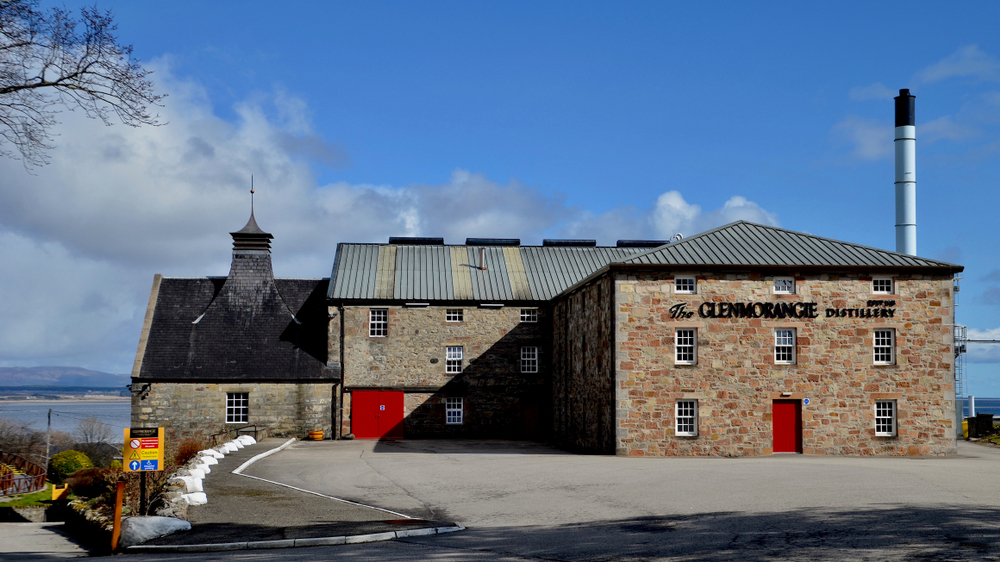
Glenmorangie sits on the shore of the Dornoch Firth, 36 miles north of Inverness, in a stretch of countryside so serene it almost seems designed to slow you down. The distillery, founded in 1843, is famous for two things: its copper stills are the tallest in Scotland (their necks measure 5.14 metres — the same height as a giraffe, as their guides will tell you), and their pioneering approach to cask management, which has made Glenmorangie one of the most experimentally varied whiskies in the world.
The Classic Tour (1 hour, £26/~$33) covers the full distillery with two drams at the end, including the flagship Original 12 Year Old. The atmosphere is polished but warm — the distillery has recently transformed its visitor centre in collaboration with design studio Russell Sage, and the tasting rooms are beautifully done. For a richer experience, the Signet Tour (approximately £35/~$44 per person, based on published 2025 pricing) takes you into the exclusive Signet Room for an immersive tasting of the heavily sherried, chocolate-malt-driven Signet — Glenmorangie’s most opulent expression. The Heritage Tour (£130/~$165) offers the deepest access, including rare cask selections.
A stunning option for golf and whisky travelers: Glenmorangie sits 15 minutes from Royal Dornoch, one of Scotland’s finest links courses, making a combined day entirely feasible.
The Practical Details
- Tour Costs: Classic Tour £26 (~$33); Signet Tour approximately £35 (~$44); Heritage Tour approximately £130 (~$165). Book via glenmorangie.com. Driver’s drams (to take home) are available for non-drinkers.
- How to Get There: 36 miles north of Inverness on the A9. By car, approximately 45 minutes from Inverness. There is a bus (Stagecoach service) from Inverness to Tain (50 minutes), though a taxi or private driver is recommended for flexibility.
- Arranging a Driver: Friendly Highland Tours and Historic & Scenic Tours both offer private Highland whisky days from Inverness combining Glenmorangie with nearby Balblair or Dalmore. Expect approximately £300–$450 (~$380–$570) for a group of 2–4.
- Best Time to Visit: Summer (June–August) the distillery operates half-hourly tours, 7 days a week. Spring and autumn are less crowded and equally beautiful, with Highland light that photographers will appreciate.
What to Buy
The distillery shop carries exclusive expressions including the Glenmorangie 18 Year Old Extremely Rare (approx. £85/~$108), the coveted Signet (approx. £160/~$203), and limited annual releases. The Original 12 Year Old is reliably approximately £35/~$44 — excellent value for a whisky of this complexity. Watch for the A Tale of… limited series, released periodically; they sell quickly and aren’t always available in the US.
Souvenirs: Glenmorangie’s gift range is some of the most stylish in Scotland — their copper-toned ceramics, notebooks, and candles reflect the brand’s aesthetic precisely.
Where to Stay & Eat
The Glenmorangie House (approx. £300–£600/~$380–$762 per night) is the distillery’s own luxury country house hotel, 20 minutes away — intimate, extraordinary, and fully immersive. The Carnegie Lodge in Dornoch and the Royal Golf Hotel offer more accessible alternatives from ~£120/~$152 per night. For food, Skibo Castle’s 1891 Bar & Brasserie is nearby and excellent. In Tain itself, the Morangie House Hotel Restaurant serves excellent Highland cooking within comfortable walking distance of the distillery.
5. Glen Scotia Distillery — Campbeltown, Kintyre
The Experience
If Springbank is Campbeltown’s soul, Glen Scotia is its underdog story — and in whisky, the underdog story is always the most interesting one. Founded in 1832, Glen Scotia has survived fires, bankruptcy, and multiple closures. Its most famous owner, Duncan MacCallum, reportedly drowned himself in the town loch after being swindled; locals claim his ghost still walks the distillery. This is exactly the kind of distillery that speaks to people who find the polished corporate visitor centre experience slightly hollow.
The current production team under Loch Lomond Group has quietly transformed the whisky’s quality. Glen Scotia handles a remarkable range of cask types — ex-bourbon, sherry, port, rum, virgin oak — and its peated expressions are as compelling as its unpeated ones. The Warehouse Tour (approximately £65/~$83 per person) is the signature experience: access to the working warehouse, cask draw samples from multiple expressions at cask strength, and a genuine behind-the-scenes quality that larger distilleries can rarely match.
The Practical Details
- Tour Cost: Standard tour approximately £15–£25 (~$19–$32); Warehouse Tour approximately £65 (~$83) per person. Book online at glenscotia.com or call the distillery at +44 (0)1586 552288.
- How to Get There: Glen Scotia is on High Street in central Campbeltown — walkable from anywhere in town. Getting to Campbeltown: 2.5-hour drive from Glasgow, or Loganair flight from Glasgow (35 minutes, approx. £80–£160/~$100–$203 return).
- Arranging a Driver: Same operators as Springbank above — most Campbeltown whisky tours include Glen Scotia as a natural pairing. The two distilleries are 5 minutes’ walk apart, so a single-day visit to both is entirely practical.
- Best Time to Visit: May, during the Campbeltown Malts Festival. Glen Scotia releases special festival bottlings, hosts warehouse events, and the town has a warmth and energy that’s unlike anywhere else during festival week.
What to Buy
The Glen Scotia 15 Year Old (approx. £55/~$70) is the benchmark of the range — rich, coastal, and complex in a way that surprises people expecting something rough. The Victoriana (approx. £60/~$76), finished in heavily charred oak casks, is the statement bottle: deeply spiced, long, and genuinely excellent. The Double Cask expression (approx. £35/~$44) is the most accessible entry point. Festival bottlings and single casks are available in the distillery shop while they last.
Souvenirs: Glen Scotia’s branded merch is appropriately understated. The copper-labeled bottles themselves are souvenir enough — especially a cask-strength warehouse release.
Where to Stay & Eat
Same recommendations as Springbank above — the Ardshiel Hotel and Seafield Hotel both serve the town. The Commercial Inn is a classic Scottish pub perfect for debriefing over a post-tasting pint of Tennent’s. The Wee Toon Chip Shop, mentioned above, remains the best food value in Campbeltown.
The Practical Guide: Doing This Right
Arranging drivers. Scotland has a strict zero-tolerance drink-drive policy. If you plan to taste seriously at multiple distilleries in a day — and you should — arranging a driver is not optional. Private tour operators with driver-guides are available everywhere in Scotland. Costs vary widely: for a private day tour for 2–4 people, budget £250–£500 (~$320–$635) for the vehicle and guide, on top of individual tour and tasting costs. Operators worth researching include Speyside Tours (for Glenfiddich and Speyside), Scottish Routes (Islay and Campbeltown multi-day packages), Whiskywheels Tours (Campbeltown specialist), and Friendly Highland Tours (Inverness and Highlands). Many distilleries also offer “driver’s drams” — sealed sample pouches for the person behind the wheel, to enjoy at the hotel later.
What to buy and how to get it home. Most distillery bottles can be transported in checked luggage if properly padded. A 70cl bottle weighs approximately 1.3kg; most airlines permit up to 5 litres of alcohol per passenger. Purchase a wine skin or bubble-wrap bottle protector (available in most airport gift shops). For rare or heavy purchases, distilleries including Glenfiddich and Springbank can arrange international shipping directly; ask in the shop.
The currency. All fees above are converted at approximately £1 ≈ $1.27. Confirm the current rate before travel — it fluctuates, and these prices should be verified directly with each distillery before booking as fees may change seasonally.
Booking tasting tours in advance. For premium and warehouse experiences at all five distilleries, booking at least 4–6 weeks ahead in summer is essential. The Cadenhead’s Warehouse Tasting at Springbank and the Lagavulin Warehouse No. 3 Experience both sell out weeks in advance during peak season.
Scotland invented this drink, and the land that made it — the peat bogs of Islay, the golden Speyside valleys, the wind off the Kintyre coast — is still doing what it’s always done. The whisky you taste at the source is the same whisky that arrives in the bottle on the other side of the ocean. But it doesn’t taste the same. It never does.